
The Complete Cockatiel Care Guide: Cage, Diet, Sleep and Routine
Cockatiels are among the easiest parrots to keep, which is why they are so often a first bird. They need a roomy cage, a pellet-based diet, 10 to 12 hours of sleep, and time with you every day. Get those four right and a cockatiel can be with you for 15 to 20 years.
See the cockatiels for sale at Mo’s Birds.
Cage
- Size: at least 24 x 18 x 24 inches for one bird. Wider is better than taller, because cockatiels fly side to side.
- Bar spacing: 1/2 to 5/8 inch.
- Perches: several natural wood perches of different thickness; avoid sandpaper covers.
- Placement: in a room where the family spends time, against a wall, away from the kitchen and from drafts.
Diet
Mostly small pellets and chopped vegetables, with a little seed and fruit. Fresh water and a varied, mostly pellet-based diet matter most.
Sleep and night frights
Cockatiels need 10 to 12 hours of dark, quiet sleep. They are prone to night frights: sudden panic in the dark, with thrashing that can break feathers. A dim night light and a partly uncovered cage usually prevent it.
Dust and bathing
Cockatiels shed a fine white powder from their feathers. Mist the bird with lukewarm water or offer a shallow dish a few times a week, wipe the cage weekly, and consider an air purifier.
Handling and time out of the cage
Plan on at least an hour out of the cage every day in a bird-safe room: windows and doors shut, ceiling fan off, no open water. Most cockatiels like head scratches more than being held. Go at the bird’s pace; how to bond with a new parrot walks through the first weeks.
Toys
Cockatiels prefer things they can shred and nibble: paper, soft wood, palm leaf, bells. Rotate toys weekly.
Common health problems
- Fatty liver disease from too much seed.
- Respiratory illness; watch for tail bobbing and sneezing.
- Chronic egg laying in hens.
- Injuries from night frights.
Know the signs a parrot is sick and book a yearly check with an avian vet.
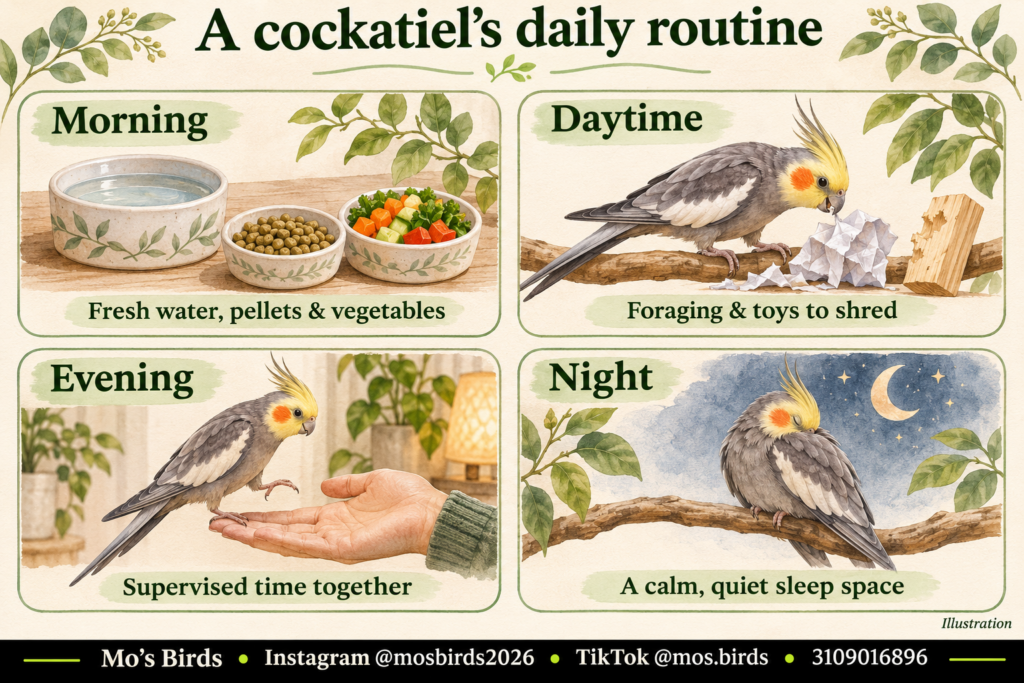
A simple daily routine
| When | What |
|---|---|
| Morning | Uncover, fresh water, pellets and chopped vegetables |
| Daytime | Radio or window view if you are out; toys to shred |
| Evening | An hour or more out of the cage, a little seed as a training treat |
| Night | Cover partly, night light on, 10 to 12 hours of quiet |
Before the bird comes home, prepare your home for a baby parrot. For colors, see cockatiel colors and mutations.
Frequently asked questions
Are cockatiels good pets for beginners?
Yes. They are gentle, hardy and forgiving of small mistakes.
Can a cockatiel be left alone during the day?
Yes, if it gets attention morning and evening. A second cockatiel is an option if the house is empty for long hours.
Do cockatiels need a companion?
Not if you spend time with them daily.
How often should the cage be cleaned?
Change the tray liner every day or two and wash the cage weekly.
No Comments
Leave a Comment