
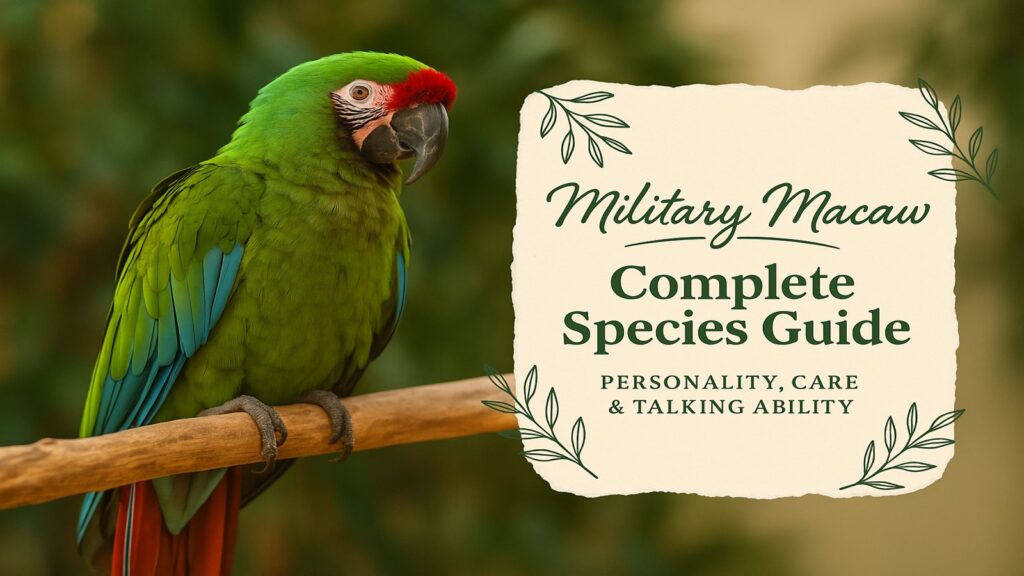
Military Macaw Species Guide
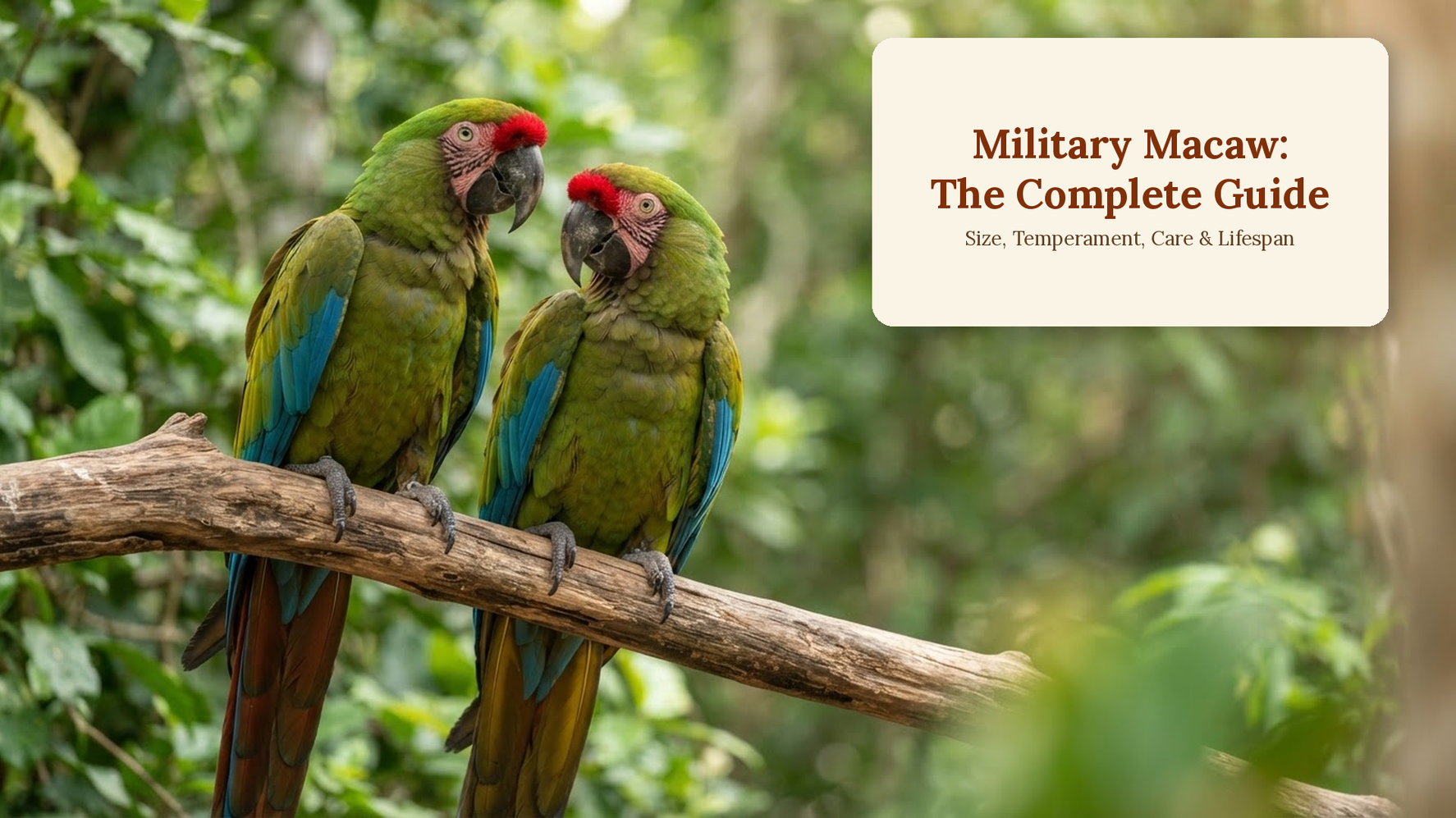
The military macaw (Ara militaris) is a large green macaw with a bare facial patch, a red forehead, and long blue-and-red tail feathers. It is one of several macaw species that may be kept as companion birds. Its looks and reputation alone cannot tell you whether an individual will suit your household: size, vocal behavior, history, health, and daily needs all matter.
Appearance and identification
Military macaws are mostly green, with a red forehead and blue accents on the wings and tail. Related macaws can look similar, and young birds may differ in appearance from adults. Ask a qualified bird professional to confirm identification and review any records when a bird’s species or background is uncertain.
Behavior and communication
Military macaws are intelligent parrots that need opportunities to forage, move, explore, and learn. A particular bird may enjoy interaction, prefer more distance, or need time to settle into a new home. Do not count on a species reputation to predict whether a bird will be affectionate, quiet, or easy to train.
Macaws vocalize, and their calls can be loud. Ask the current caretaker about the bird’s normal sound level throughout the day, and consider how calls may affect neighbors and other people in the home. Some parrots imitate sounds or words, but speech varies and should never be treated as a guarantee or the main reason to choose a bird.
Daily care and home setup
Space and safety
Prepare secure housing with room to move, climb, stretch, and use enrichment. Provide safe supervised activity outside the enclosure when appropriate. Keep doors and windows secured, turn off ceiling fans, and prevent access to hot surfaces, fumes, unsafe household materials, and other pets. Our bird-proofing checklist can help you review the room.
Enrichment and interaction
Offer appropriate foraging, chewing, and problem-solving activities, and inspect toys and perches frequently for damage. Create predictable daily routines and use positive reinforcement for training. Let the bird choose whether to approach; do not force handling. Our new-parrot trust guide explains how to start calmly.
Food and veterinary care
Ask an avian veterinarian to recommend a balanced diet, routine examinations, and preventive care for the individual bird. Avoid making sudden diet changes without veterinary guidance. Plan for costs beyond the initial purchase, including a large enclosure, food, replacement enrichment, and routine or urgent veterinary care. The Association of Avian Veterinarians’ owner resources are a starting point for care discussions.
Is a military macaw the right bird for you?
Before making a commitment, consider whether your home can accommodate a large, vocal, active parrot and whether you can provide daily enrichment and long-term veterinary care. Meet the individual in a calm setting. Ask about age, health records, current diet, routine, behavior, and prior homes. Arrange an avian-veterinary exam and prepare the setup before the bird arrives.
- Can I accommodate loud calls and possible changes in routine?
- Do I have room for safe housing and supervised activity?
- Can I afford ongoing food, enrichment, and veterinary care?
- Who will care for the bird during travel or life changes?
If you are comparing large parrots, read our macaw species comparison and macaw species comparison. Learn about other birds in the Mo’s Birds blog, or contact us with questions.