

Cockatiel Lifespan: How Long Do Cockatiels Live?
A well-cared-for pet cockatiel usually lives 15 to 25 years, and some reach their 30s. A cockatiel named Sonny was verified by Guinness World Records as the oldest living cockatiel at 32 years and 292 days. Wild cockatiels in Australia live much shorter lives, typically 10 to 15 years. The gap between those numbers is almost entirely down to care, and that’s the part you control.
How long do cockatiels live? The short version
- Typical pet lifespan: 15–25 years (Chewy’s vet-reviewed guide)
- Wild lifespan: about 10–15 years
- Oldest verified: 32 years 292 days (Guinness World Records)
- What usually shortens it: a seed-only diet, egg-laying problems in hens, household toxins and accidents
You’ll see lower numbers online, often “10 to 15 years.” Those usually describe wild birds or cockatiels kept on poor diets. A cockatiel bought today as a hand-raised baby, fed well and kept safe, can reasonably be expected to see its late teens or twenties.
Cockatiel life stages
| Age | Life stage | What’s going on |
|---|---|---|
| 0–8 weeks | Chick | Hand-feeding, feathering out, learning to eat on its own |
| 2–6 months | Juvenile | Weaned, curious, learning to fly. Males start trying out whistles |
| 6–12 months | First molt | Adult colors come in. This is when you can often tell males from females |
| 1–10 years | Adult | Peak energy. Hens may start laying eggs, even with no male |
| 10–15+ years | Senior | Slower, may sleep more. Twice-yearly vet checks are worth it |
| 20+ years | Elderly | Reachable with excellent care. The record is over 32 years |
What affects how long a cockatiel lives
1. Diet
This is the big one. Cockatiels love seed, and a seed-only diet is linked to obesity, fatty liver disease and vitamin A deficiency, all of which shorten life. Aim for pellets as the base, plus fresh vegetables and some seed as a treat. Our cockatiel care guide covers daily feeding in detail, and the safe fruits and vegetables list helps with variety.
2. Egg laying in hens
Female cockatiels can lay eggs with no male around, and some lay clutch after clutch. Chronic laying drains calcium and can lead to egg binding, which is a vet emergency. Signs to watch for include straining, sitting fluffed on the cage floor, or tail bobbing. Limiting daylight to about 10–12 hours, removing “nest” spots and avoiding back petting all help.
3. Household dangers
Cockatiels are fast, curious flyers, and many die young from accidents rather than old age: open doors, ceiling fans, hot stoves, open toilets and other pets. Their lungs are also very sensitive, so fumes from overheated non-stick cookware, aerosols and scented candles can be fatal. Work through our parrot-proofing checklist before your bird comes home.
4. Genetics and color
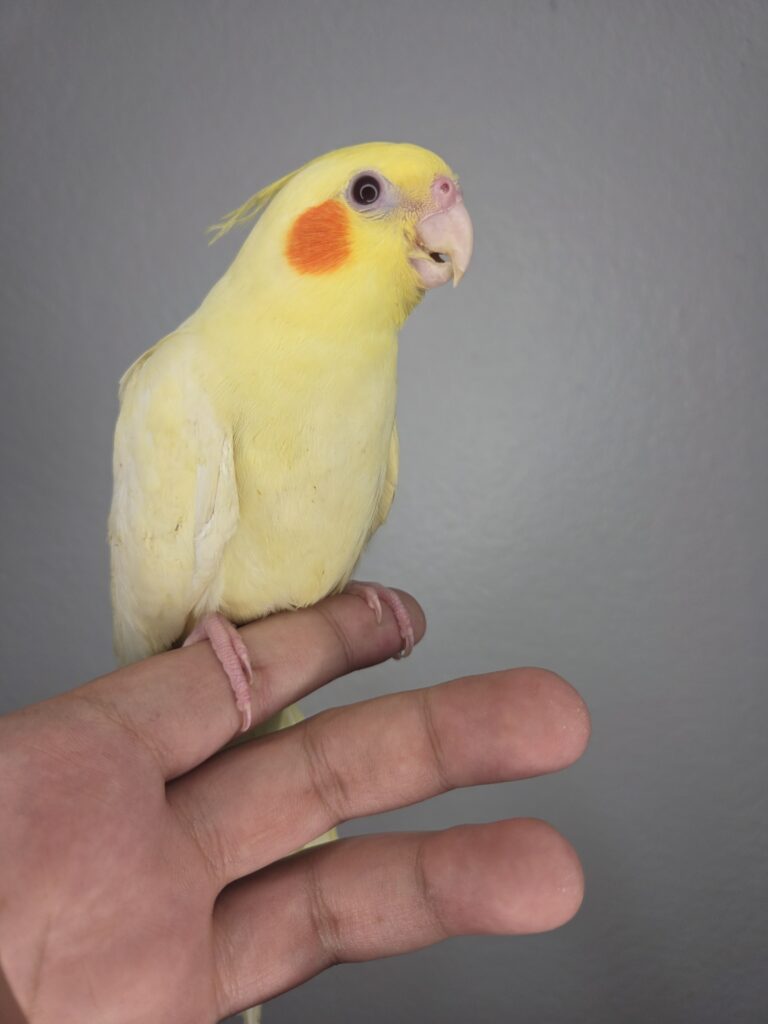
Avian experts at Lafeber note that normal grey cockatiels tend to have the longest lifespans compared with heavily line-bred color mutations. That doesn’t mean a lutino or pearl will be short-lived. It’s one reason to buy from a breeder who pays attention to healthy pairings rather than color alone. See our cockatiel colors guide for the different varieties.
5. Sleep, exercise and attention
Cockatiels need 10–12 hours of dark, quiet sleep, daily time out of the cage and someone to interact with. Bored, under-slept birds are more prone to stress, plucking and night frights, where a cockatiel panics in the dark and thrashes around the cage. A small night light near the cage helps prevent injuries.
6. Vet care
Birds hide illness until they’re quite sick, so a yearly avian vet check catches problems early. Learn the warning signs of a sick parrot. Fluffed feathers, tail bobbing, changes in droppings or sleeping on the cage floor all deserve a same-week vet visit.
How to help your cockatiel live a long life
- Switch gradually from seed to a pellet-based diet with daily vegetables
- Give 10–12 hours of dark sleep and a night light
- Bird-proof the room before every out-of-cage session
- Keep non-stick cookware, aerosols and scented products away from your bird
- Discourage chronic egg laying in hens, and call a vet if she strains
- Book a yearly avian vet visit, and go sooner if anything changes
- Spend time with your bird every day. Cockatiels are flock birds
How cockatiels compare with other pet birds
Cockatiels sit in the middle of the pack: much longer-lived than budgies, similar to lovebirds and green cheek conures, and far shorter than big parrots like macaws and African greys. Our parrot lifespan chart lines up all the common species, and cockatiel vs parakeet compares the two most popular small birds directly.
Cockatiel lifespan FAQ
Do male or female cockatiels live longer?
There’s no reliable evidence that one sex naturally outlives the other. In practice, hens face extra risk from chronic egg laying and egg binding, so managing hormones matters more with females.
How can I tell how old my cockatiel is?
You usually can’t, once a cockatiel is past its first molt. Babies have shorter tails, pinker beaks and, in many colors, barred tail feathers. After about a year, adults look much the same until old age. A leg band from the breeder is the most reliable record.
Is 15 old for a cockatiel?
It’s a senior, but not the end. Many well-kept cockatiels live comfortably into their twenties.
Thinking about a cockatiel?
A cockatiel is a 15–25 year companion, so it’s worth starting with a healthy, well-socialized bird. Mo’s Birds hand-raises cockatiels in Southern California in several colors. See cockatiels for sale or read what to look for when buying a cockatiel.
No Comments
Leave a Comment