
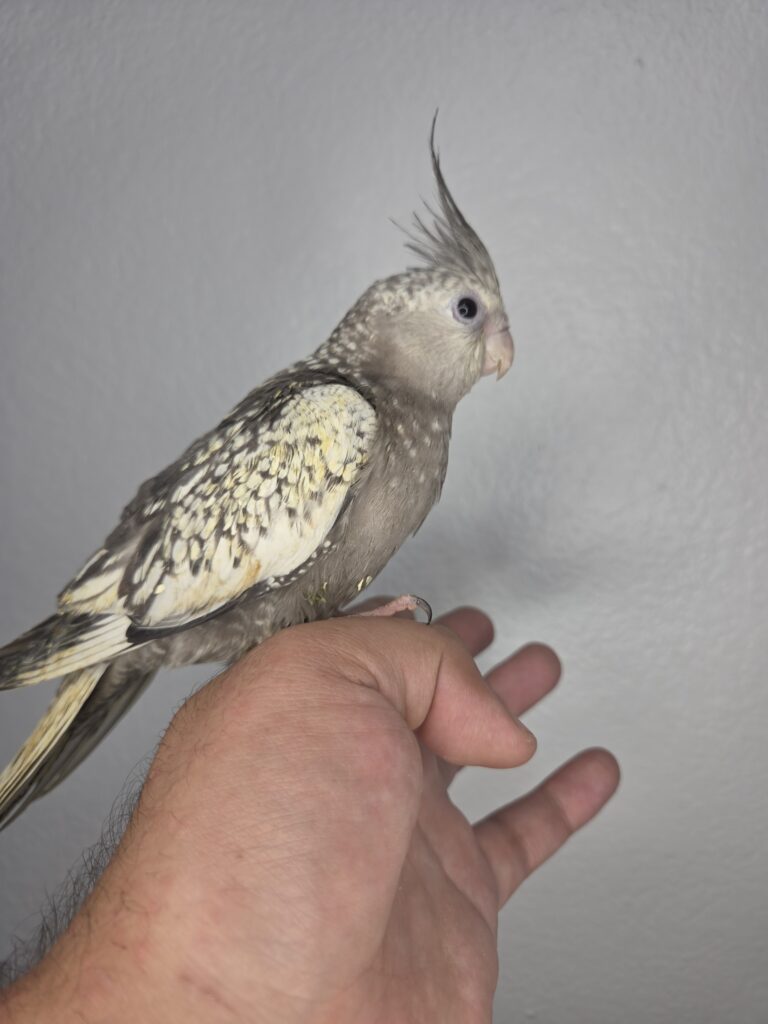
Do Cockatiels Talk? Plus How to Tell Male vs Female Cockatiels
Yes, cockatiels can talk, but mostly the males, and not very much. Cockatiels are brilliant whistlers and mimics of household sounds, and a male may learn a handful of words in a soft, whistly voice. Females usually stay quieter, sticking to chirps and contact calls. That’s also why “do cockatiels talk?” and “is my cockatiel male or female?” go hand in hand. This guide covers both: what to expect from your bird’s voice, and how to tell boys from girls.

Do cockatiels talk?
VCA Animal Hospitals describes cockatiels as wonderful whistlers with a limited ability to talk, in a whistle-like voice, and notes that males tend to be better talkers than females (VCA cockatiel overview). In real life that usually means:
- Whistling: the main event. Males often copy whole tunes, ringtones and the doorbell
- Words: a male may pick up a few short words or phrases, like his name, “pretty bird” or “hello.” Some never talk at all
- Sounds: microwave beeps, kissing noises, your phone, other pets
- Females: generally quieter. They chirp and call but rarely whistle tunes or talk, though there are exceptions
If a talking bird is a must, a cockatiel isn’t the right pick. See our best talking parrots ranked list. But if you love a bird that whistles back at you every morning, a male cockatiel is hard to beat.
How to teach a cockatiel to talk or whistle
- Start young. Males usually begin practicing whistles and sounds from a few months old, around the time they start their first molt
- Pick one short word or tune and repeat it clearly, with enthusiasm, several times a day
- Tie words to actions: say “step up” every time it steps up, and “hello” whenever you walk into the room
- Reward attempts with a favorite treat or a head scratch, even if they’re rough
- Keep sessions short (5–10 minutes) and happy. A relaxed, bonded bird learns fastest
- Be careful what you whistle. Cockatiels love loud, repetitive sounds, and once a phone ringtone is learned, it stays
Our step-by-step guide on how to teach a parrot to talk goes deeper, and bonding with a new parrot explains how to build the trust that makes training work.
Male vs female cockatiel: how to tell the difference
Baby cockatiels all look alike. The clues appear after the first molt, usually somewhere between 6 and 12 months, when adult feathers come in. Before then, behavior hints and DNA testing are your best tools.
Look at the face and cheeks
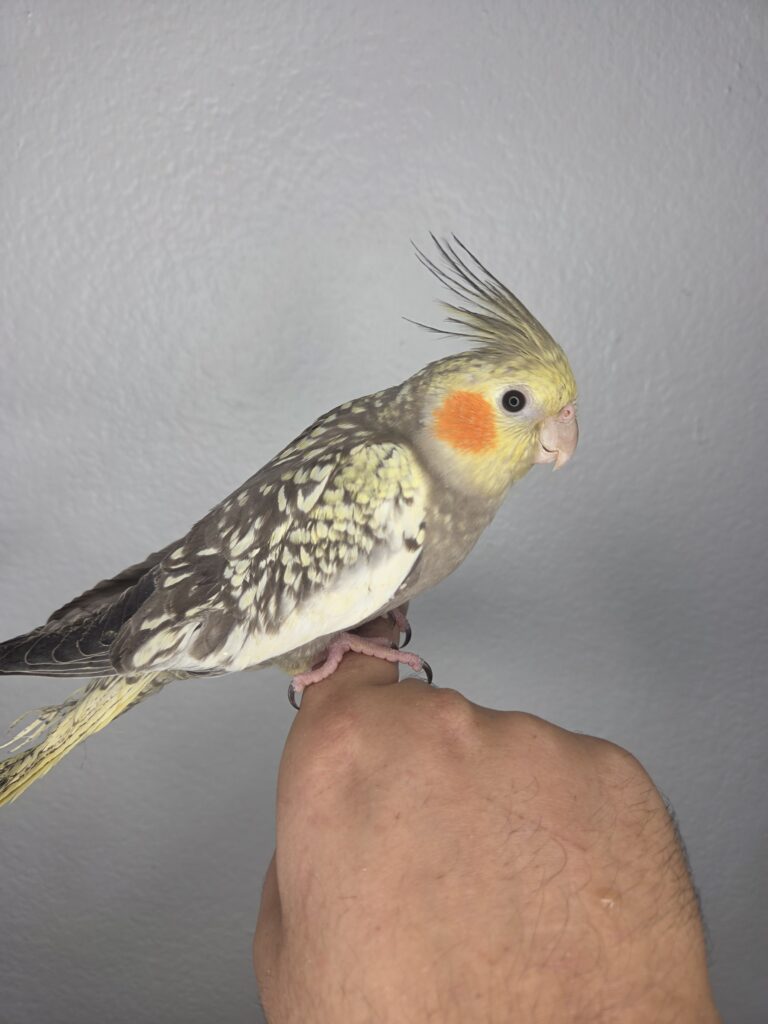
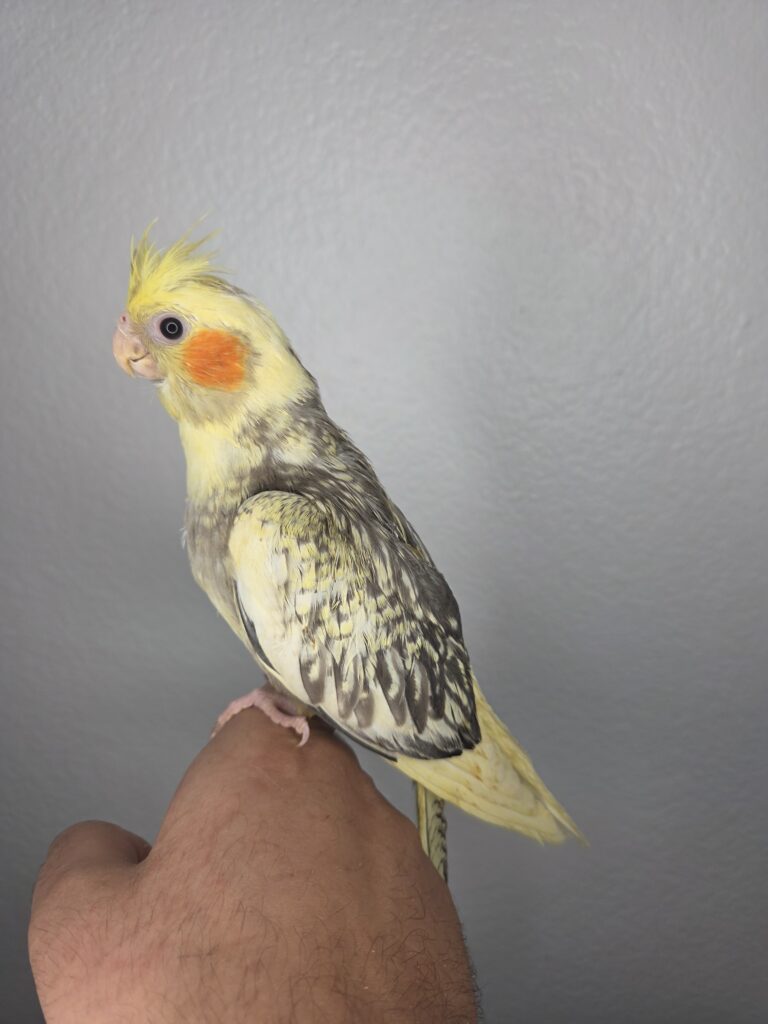
In normal grey cockatiels, adult males develop a bright, solid yellow face and crest with vivid orange cheek patches. Females keep a greyer face with duller orange cheeks. Whiteface birds have no yellow or orange, but males get a cleaner, brighter white mask.
Check under the wings and tail
This is the most reliable visual test. Spread a wing gently and look at the underside of the long flight feathers, then look under the tail. Adult females keep small yellow or white spots under the wings and horizontal barring on the tail. Adult males lose them and turn solid grey (or solid color) underneath. VCA describes the same markers: mature males have solid grey under the tail and on the long wing feathers, with no spots.
Watch the behavior
- Males tend to whistle, sing and show off: strutting with wings held out in a heart shape, head bobbing and tapping their beak on surfaces
- Females are often calmer and quieter, and more likely to hiss or chew paper into “nest” material
- Egg laying is the only behavior that proves a bird is female. Hens can lay eggs with no male around
When color mutations make it harder
| Color | Can you tell by looking? | What to look for (after first molt) |
|---|---|---|
| Normal grey, cinnamon, whiteface, yellowcheek | Usually yes | Males: solid face, bright cheeks, no spots under wings, no barred tail. Females: duller face, spotted underwings, barred tail |
| Pearl | Often | Females keep their pearl markings for life. Many males lose most of theirs after molting |
| Lutino | Sometimes | Females may show faint yellow spots under the wings and barring on the tail. Hold the wing up to the light |
| Pied and heavily pied | Rarely | Pied patches hide the usual markings. DNA testing is the reliable answer |
The only 100% answer: DNA sexing
If you need to know for certain, for example because you want a male for whistling or you’re planning a breeding pair, a DNA test from a few feathers or a drop of blood gives a definite answer. At Mo’s Birds, DNA sexing is available as an optional add-on. Read how DNA sexing works and what it costs.
Male or female: which makes a better pet?
Both make excellent pets, so choose for the personality you want:
- Choose a male if whistling, singing and possible talking matter to you, and you don’t mind a louder, showier bird
- Choose a female if you’d like a quieter, often gentler bird. Be ready to manage egg laying, which matters for her long-term health (see our cockatiel lifespan guide)
Honestly, individual personality matters more than sex. A well-socialized hand-raised cockatiel of either sex makes a sweet, affectionate companion. Our cockatiel care guide covers daily care for both.
FAQ
At what age do cockatiels start talking?
Many males start whistling and copying sounds at around 6 months old, and words, if any, usually come after that. Some keep adding new sounds for years.
Can female cockatiels talk?
Occasionally, but it’s uncommon. Most females stick to chirps and calls.
Can you tell a baby cockatiel’s sex?
Usually not by looking, except in certain sex-linked color pairings where an experienced breeder can predict sex from the chicks’ colors. Otherwise, wait for the first molt or DNA test.
Find your cockatiel
Mo’s Birds hand-raises cockatiels in Southern California in normal grey, pearl, pied, lutino, whiteface and more. See cockatiels for sale, and compare colors in our cockatiel colors guide.
No Comments
Leave a Comment