
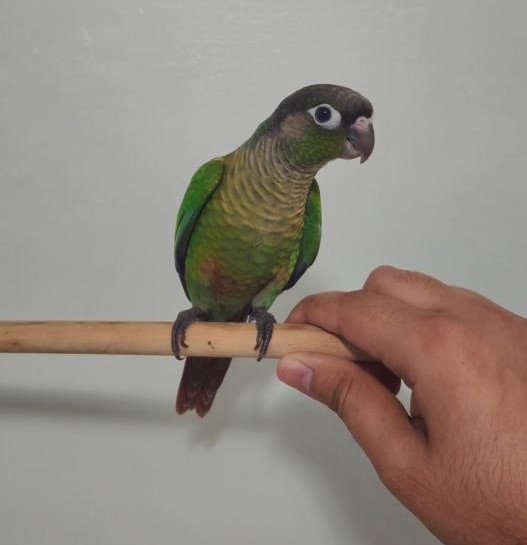
Green Cheek Conure: Personality, Colors, Care and Price
The green cheek conure is a small, playful parrot, about 10 inches long and 2–3 ounces. It packs a big personality into a body that fits in your hand. It’s cuddly, curious and much quieter than its cousin the sun conure, which is why so many breeders (us included) point first-time parrot owners toward one. With good care a green cheek usually lives 20 years or more.
Green cheek conure quick facts
- Scientific name: Pyrrhura molinae (the green-cheeked parakeet)
- Size: about 10 inches (25–26 cm) including the long tail
- Weight: roughly 60–80 grams
- Lifespan: 20+ years with good care
- Noise: moderate. They chatter and squawk, but they’re far quieter than sun conures
- Talking: some learn a few words. Most are better at whistles and sounds
- Wild status: Least Concern (IUCN)
- Price at Mo’s Birds: from $274.99 (normal), up to $499.99 for rare color mutations
What is a green cheek conure?
Green cheeks come from the forests and woodlands of central South America: Bolivia, western Brazil, Paraguay and north-western Argentina. Unlike the sun conure, they’re doing fine in the wild and are listed as Least Concern (species overview). In the wild they live in flocks, which explains a lot about pet green cheeks: they want company, they like routine, and they get bored if they’re left alone too long.
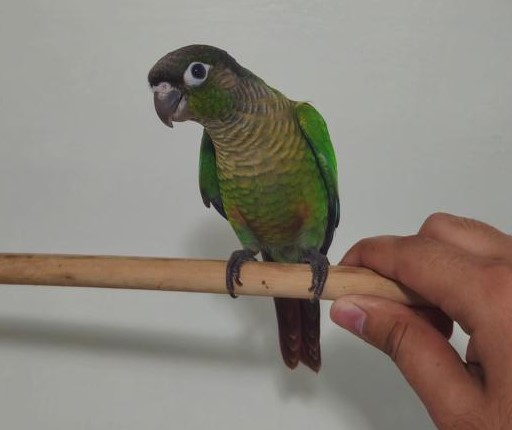
Despite the name, the “green cheek” is mostly green all over. Look for a grey-brown cap, a scalloped grey chest, a maroon belly patch, a long maroon tail and blue flight feathers. Males and females look identical, so DNA sexing is the only reliable way to know which you have.
Personality: why green cheeks are so popular
A well-socialized green cheek is a pocket clown. Expect it to dangle upside down from toys, burrow into blankets and hoodie pockets, “dance” to music and follow you around the house. They’re confident for their size and quick to learn tricks like stepping up, turning around and waving. Many green cheeks bond with the whole household rather than just one person, so they suit families.
They do have attitude. Green cheeks go through a nippy phase as youngsters and during hormonal seasons, and a bored green cheek will chew anything it can reach. Daily out-of-cage time, lots of shreddable toys and consistent, gentle handling solve most of it. Our guide on how to stop parrot biting covers the nipping stage.
Are green cheek conures loud?
Not by parrot standards. Green cheeks do chatter, chirp and squawk, especially in the morning, when they’re excited, or when they want attention. But they don’t have the ear-splitting scream of a sun conure, and many people keep them happily in apartments. For a detailed comparison, see are green cheek conures loud? and our sun conure vs green cheek conure breakdown.
Can green cheek conures talk?
Some can. A green cheek’s voice is small and gravelly, and many never say more than a handful of words like “hi,” “step up” or their own name. They’re usually better at whistles, kissing noises and copying household sounds. If talking matters a lot to you, look at the species in our best talking parrots ranked list instead.
Green cheek conure colors and mutations
Green cheeks have more color varieties than almost any other small parrot. Most are combinations of a few basic mutations: cinnamon, yellow-sided, turquoise and a handful of rarer ones. Personality doesn’t change with color, so pick the bird, not just the paint job. For the genetics behind each one, see the full green cheek conure colors guide.
| Color | What it looks like | Mo’s Birds price |
|---|---|---|
| Normal (wild type) | Green body, grey-brown head, maroon tail, blue flight feathers | $274.99 |
| Cinnamon | Softer lime-to-yellow green body with a brighter cinnamon-red tail | $274.99 |
| Yellow-sided | Yellow-orange wash across the chest | $274.99 |
| Pineapple | Cinnamon + yellow-sided combined: bright yellow, orange and red tones | $274.99 |
| Turquoise | Soft blue-green body, pale grey chest, darker tail | $329.99 |
| Turquoise cinnamon / pineapple / yellow-sided | Turquoise combined with the mutations above for pastel blue-green shades | $329.99 |
| Sun cheek | One of the rarest and brightest mutations. Ask for confirmed parentage | $329.99 |
| Dominant red pineapple | Pineapple coloring with extra red feathering | $374.99 |
| Moon cheek | A rare, lighter-toned variety. See the listing photos | $499.99 |


How long do green cheek conures live?
Plan on 20 years or more. Major pet care guides such as Petco’s vet-approved care sheet list 20+ years with proper care, and some wildlife assessments give a range of up to 25–30 years. Diet, exercise, a toxin-free home and catching illness early make the biggest difference. Learn the signs of a sick parrot, and compare species on our parrot lifespan chart.
What do green cheek conures eat?
Feed pellets as the base of the diet. Chewy’s care guide suggests pellets make up about 60–70% of what a green cheek eats. Fill the rest with fresh vegetables, a smaller amount of fruit, and seeds or nuts as treats and training rewards.
- Every day: pellets, fresh water, chopped vegetables (leafy greens, bell pepper, carrot, broccoli, sweet potato)
- A few times a week: fruit such as apple (no seeds), berries, mango, banana
- Treats: millet spray, sunflower or safflower seeds, small bits of nut
- Never: avocado, chocolate, caffeine, alcohol, or salty or sugary people food
See our safe fruits and vegetables list and the full foods toxic to parrots guide.
Cage and setup
For one green cheek, care sheets list a minimum cage of about 24″ wide x 24″ deep x 30″ high, with bar spacing no wider than about 1/2 to 3/4 inch so small heads can’t get stuck. Bigger is always better. Green cheeks are acrobats and use every inch. Our cage size guide by species goes into more detail.
- Perches of different widths and materials
- Plenty of shreddable, foraging and hanging toys, rotated weekly
- A sleep tent or “snuggle hut” (watch for hormonal behavior and remove it if it starts)
- A bird-safe room or play stand for daily time outside the cage
How much does a green cheek conure cost?
At Mo’s Birds, normal, cinnamon, yellow-sided and pineapple green cheeks are listed at $274.99, turquoise varieties at $329.99, and rare mutations like moon cheek up to $499.99 (see the table above). Add a cage, toys, food and a first avian vet visit. Our green cheek conure cost guide breaks down the full first-year budget. Green cheeks sell quickly, so if the color you want shows sold out, contact us to ask about upcoming clutches.
Is a green cheek conure right for you?
Great fit if you:
- Want an affectionate, hands-on parrot without extreme noise
- Live in an apartment or a home with neighbours close by
- Can give 1–3 hours of interaction and out-of-cage time every day
- Are ready for a 20+ year commitment
Maybe not if you:
- Want a strong talker
- Are away from home most of the day with no one else around
- Don’t want to deal with a nippy juvenile phase
Still comparing beginner birds? See the easiest parrots for beginners.
Green cheek conure FAQ
Are green cheek conures good for beginners?
Yes. They’re one of the best first parrots: small, affectionate, relatively quiet and easy to handle once they trust you.
Do green cheek conures like to be held?
Most hand-raised green cheeks love being held and carried around, and many enjoy head scratches and snuggling in a hand or shirt pocket.
Male or female: which is better?
Both make great pets. Personality varies more from bird to bird than between sexes. Females can lay eggs without a mate, which is worth knowing if you choose a hen.
Can a green cheek live alone?
Yes, as long as you give it daily attention. A single green cheek usually bonds more closely with its people. If everyone’s out all day, a second bird can help, but you’ll need a bigger cage.
Find your green cheek
Mo’s Birds hand-raises green cheek conures in Southern California and ships nationwide. Browse every color on the conures for sale page, or get in touch to ask about the next clutch.
No Comments
Leave a Comment