
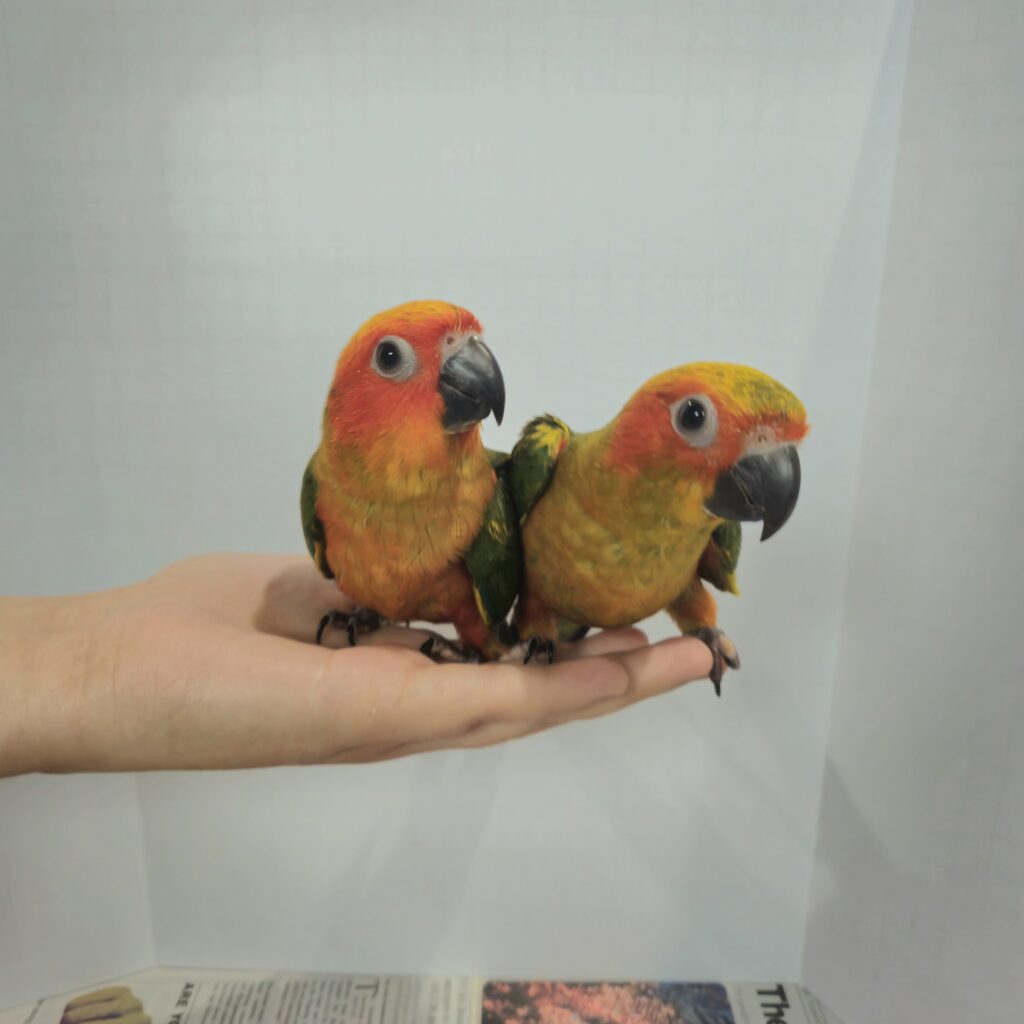
Sun Conure: Personality, Care, Lifespan and Cost
A sun conure is a 12-inch, 4-ounce South American parrot that looks like a sunset and sounds like a car alarm. It’s one of the most affectionate small parrots you can own, and also one of the loudest. With good care a sun conure usually lives 20 years or more, so you’re choosing a companion for a big part of your life. This guide covers what sun conures are really like to live with: personality, noise, diet, setup, lifespan and cost. It’s written from the point of view of a breeder who hand-raises them in Southern California.
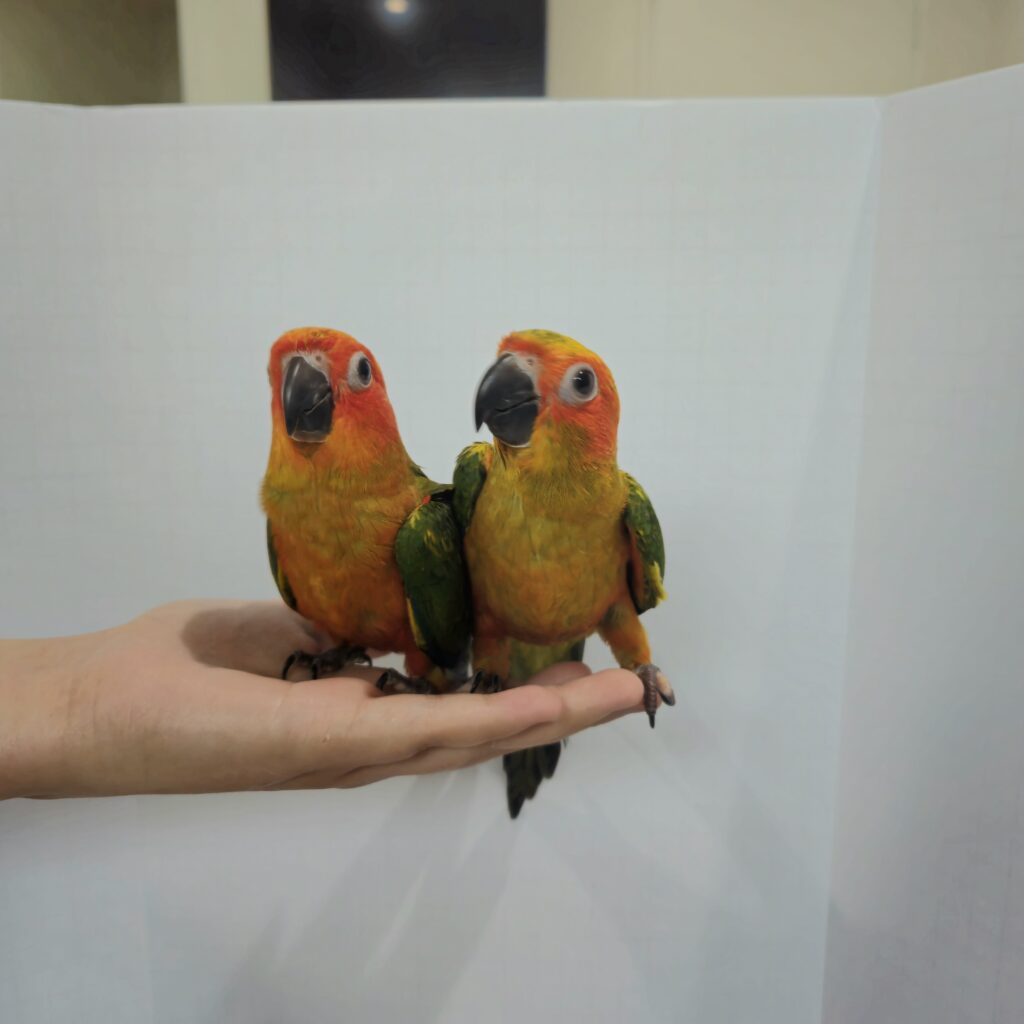
Sun conure quick facts
- Scientific name: Aratinga solstitialis (also called the sun parakeet)
- Size: about 12 inches (30 cm) from beak to tail tip
- Weight: roughly 100–130 grams (about 3.5–4.5 oz)
- Lifespan: 20+ years with good care. Published ranges run from about 15 to 30 years
- Noise: very loud, with piercing contact calls
- Talking: a few words at most. They’re not known as talkers
- Wild status: Endangered. BirdLife estimates only 1,000–2,499 mature birds left in the wild
- Price at Mo’s Birds: hand-raised sun conures from $599.99
What is a sun conure?
Sun conures come from a small area of north-eastern South America: the savannas and forest edges of Roraima in northern Brazil and neighbouring Guyana. In the wild they’re in serious trouble. Trapping for the pet trade wiped them out of much of their range, and the IUCN now lists the species as Endangered (BirdLife International species factsheet).
That’s why buying a captive-bred bird matters. Every sun conure in the US pet trade should come from aviary-bred parents, never from wild stock. BirdLife also notes that the captive population is large, but nobody knows how many captive birds are hybrids with the closely related sulphur-breasted parakeet. That’s one more reason to buy from a breeder who knows their pairs.
Sun conure personality: what they’re like to live with
Sun conures are clowns and cuddlers. A hand-raised sun conure usually wants to be wherever you are: on your shoulder, in your hoodie, or hanging upside down from a toy while it watches you cook. They’re bold, curious and quick to learn routines, which makes them fun for owners who want an interactive bird instead of a decoration.
The flip side is that they need attention every day. A sun conure left alone in a cage for 10 hours gets bored, then loud, and sometimes starts plucking its feathers. Plan on at least a couple of hours of out-of-cage time and interaction a day.
Are sun conures loud?
Yes. Be honest with yourself about this one. Sun conures are among the loudest small parrots. Their contact call is a sharp, high-pitched scream, and most sun conures call loudly around sunrise and sunset, just as wild flocks do. Some calling is normal and can’t be trained away entirely.
If you live in an apartment with thin walls, or someone in the house works nights, a sun conure is probably the wrong bird. A green cheek conure gives you a similar cuddly personality at a fraction of the volume. Our sun conure vs green cheek conure comparison goes through the trade-offs side by side, and how loud green cheeks really are covers the quieter option. If your bird is screaming more than normal, see why parrots scream and how to reduce it.
Can sun conures talk?
A little. Many sun conures learn a handful of words or short phrases, plus whistles and household sounds like the microwave beep. Their voices are rough and squeaky compared with an African grey or an Amazon. If talking is your main reason for getting a parrot, choose a different species. If you’d still like to try, our guide on how to teach a parrot to talk explains the step-by-step method.
Sun conure colors: why babies look green
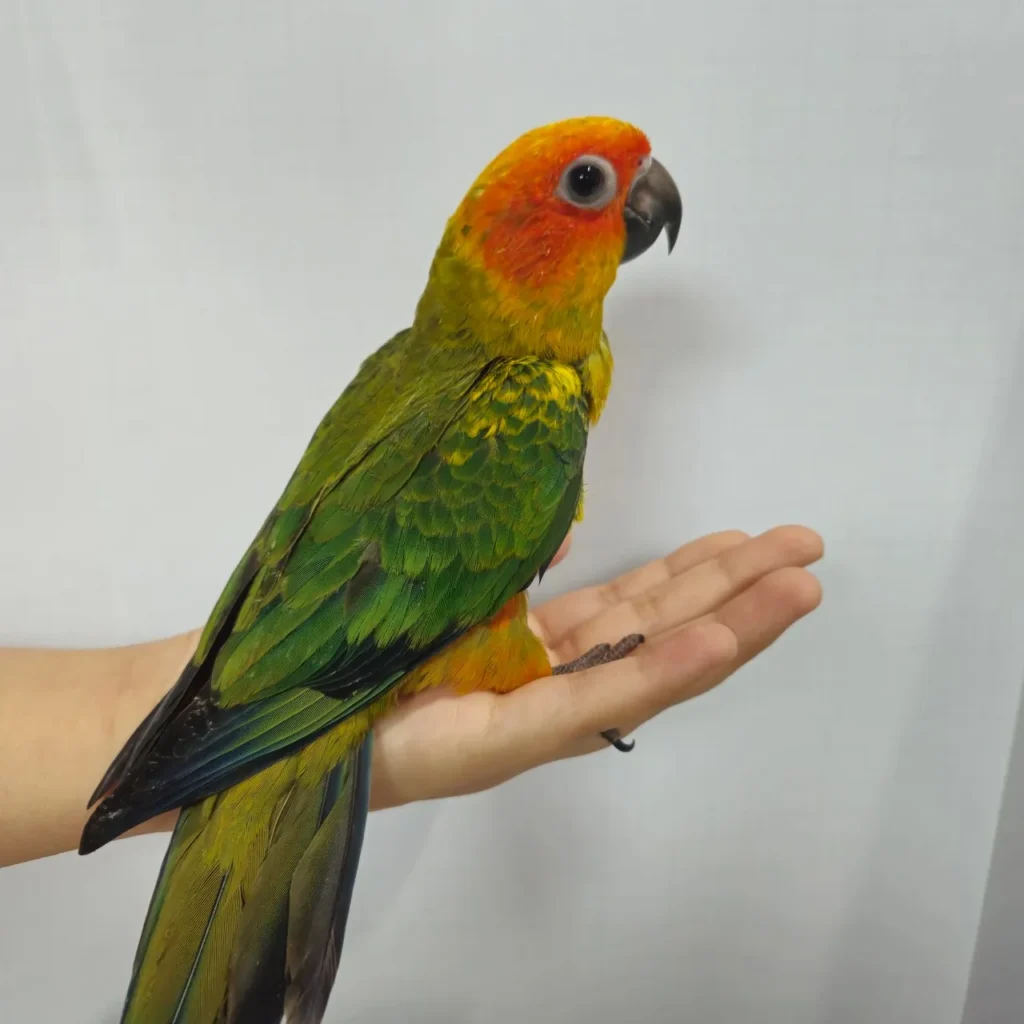
Baby sun conures are mostly green with only a little yellow. The famous orange-and-yellow adult plumage comes in gradually over the first molts, usually during the first year. So the chick you pick up at weaning won’t look like the adult photos yet. That’s normal, and it’s not a sign of a “lesser” bird.
There are also color varieties such as red-factor sun conures, which develop much deeper orange-red tones as they mature. Our sun conure colors and mutations guide explains how the color changes work.
How long do sun conures live?
With good care, a pet sun conure typically lives 20 years or more, and some reach their late 20s. Care sheets from PetMD and others quote 20+ years. Wildlife groups give a wider 15–30 year range. The difference usually comes down to diet, exercise, safe housing and regular vet care.
The biggest things that shorten a sun conure’s life are a seed-only diet, household toxins (non-stick cookware fumes, aerosols, scented candles), accidents during out-of-cage time, and illness that goes unnoticed. Learn the early warning signs of a sick parrot. Birds hide illness well. To compare sun conures with other species, see our parrot lifespan chart.
What do sun conures eat?
A healthy sun conure diet is built on a quality pellet, not seed. A practical daily split:
- Pellets: the main part of the diet, roughly half or more
- Fresh vegetables: leafy greens, peppers, carrots, broccoli, squash
- Fruit: smaller amounts, such as apple (no seeds), berries, mango, papaya
- Seeds and nuts: treats and training rewards, not the main meal
- Fresh water: changed daily
Never feed avocado, chocolate, caffeine, alcohol, or salty and sugary human snacks. Our full list of foods toxic to parrots covers the rest, and the safe fruits and vegetables guide lists what you can feed.
Cage and setup
Sun conures are active climbers and chewers, so give them the biggest cage you can fit. PetMD lists a minimum habitat of 30″ wide x 30″ deep x 36″ high for a single sun conure. More room is better, especially if the bird will spend part of the day inside while you’re at work. Our parrot cage size guide covers bar spacing and dimensions, and the sun conure size guide explains how big they get as they grow.
- Several perches of different thicknesses and materials (natural wood is ideal)
- Shreddable and foraging toys, rotated weekly. Sun conures destroy toys fast
- A spot in the main living area, out of direct drafts and away from the kitchen
- A safe, bird-proofed room for daily out-of-cage time
Health and vet care
Take a new sun conure to an avian vet within the first week or two, then go once a year. Common problems in pet conures include feather plucking from boredom or stress, obesity on seed-heavy diets, and infectious diseases such as polyomavirus that a responsible breeder screens for. At Mo’s Birds our babies are hand-raised, and you can learn how DNA sexing works here.
How much does a sun conure cost?
At Mo’s Birds, hand-raised sun conures are listed from $599.99 (see current availability). Budget for the setup on top of the bird: a proper cage, perches, toys, an initial vet visit, food and possibly shipping. For a full breakdown of first-year and ongoing costs, see our sun conure price and ownership cost guide. To compare prices with other conures, see the conure price guide.
Is a sun conure right for you?
A sun conure is a great fit if you:
- Want a very affectionate, hands-on bird that loves to be handled
- Are home a lot, or can give a couple of hours of attention every day
- Live in a house, or somewhere the noise won’t cause problems with neighbours
- Are ready for a 20+ year commitment
Think twice if you:
- Live in an apartment or a shared-wall building
- Want a bird that talks a lot
- Are away from home most of the day
- Need a quiet household (new baby, night-shift worker)
Still undecided? Read how to bond with a new parrot and how to handle nipping and biting. Those two skills decide how most first-year owners get on with a conure.
Sun conure FAQ
Are sun conures good pets for beginners?
They can be, as long as you’re ready for the noise. Their friendliness makes them easier to handle than many parrots, but their volume and need for attention surprise a lot of first-time owners.
Do sun conures like to cuddle?
Most hand-raised sun conures love close contact: head scratches, riding on shoulders, and snuggling into a shirt collar. Avoid long back-and-body petting, which can encourage hormonal behavior.
Should I get one sun conure or two?
One sun conure tends to bond more closely with its people. Two keep each other company if you’re out a lot, but expect double the noise.
At what age do sun conures get their full color?
Most finish developing their adult yellow-and-orange plumage during their first year, though it varies from bird to bird.
Ready to meet a sun conure?
Mo’s Birds hand-raises sun conures in Southern California and ships nationwide. Check the current sun conure listing or browse all conures for sale. If you have questions about a specific bird, get in touch and we’ll tell you honestly whether a sun conure fits your home.
No Comments
Leave a Comment